中編ドキュメンタリー映画「カンボジアの染織物」
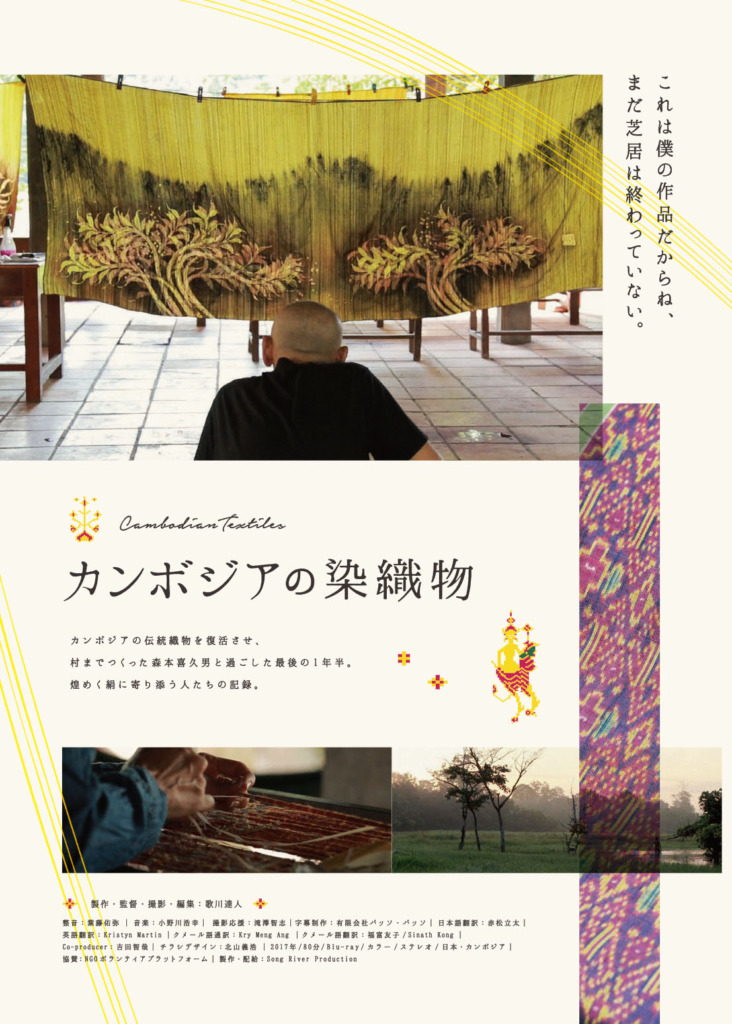
監督・撮影・編集:歌川達人 / 60min /日本&カンボジア/ 2018 / ステレオ / ジャンル:ドキュメンタリー / 共同プロデューサー:吉田智哉 / 協賛:NPOボランティアプラットフォーム / 製作・配給:Song River Production
【作品詳細】
内戦の影響で衰退されつつあったカンボジア伝統の染織物を復興させた森本喜久男(68)は末期ガンを患い、余命いくばくもないことを知る。映画は迫りくる死と向き合う命の美しさを浮かび上がらせていく。
【あらすじ】
内戦の影響で衰退されつつあったカンボジア伝統の染織物。京都の友禅職人であった森本喜久男は、カンボジアで荒地を開墾し、染織物を基幹産業とする村をゼロからつくり上げ、カンボジア伝統の染織物を発展させた。彼の活動は、「持続可能な村」「伝統文化の復活」など、近代文明のアンチテーゼとして様々なメディアから賞賛されてきた。
そんな森本だったが、末期ガンを患い、余命いくばくもないことを知る。確実に生の終わりに近づいていく森本。森本と村人を見つめ続けた眼差し(カメラ)は、それぞれの人生に隠された想いを浮かび上がらせていく。
【出品映画祭】
・ギリシャBeyond the border international film festival2018 コンペ出品・審査員賞受賞
・カンボジア国際映画祭2018 正式出品
・バルセロナ・ファッションドキュメンタリー映画祭2019 正式出品
・ブラジル・ファッションドキュメンタリー映画祭2019 正式出品
【森本喜久男さんについて】
1948年京都生まれ。友禅職人の工房へ弟子入りし20代後半で独立して手描き友禅工房「森本染芸」を主宰する。30代に入り友禅職人として行き詰まりを感じたことから、東南アジアの農村や難民キャンプでボランティア活動を始めカンボジアの素晴らしい織物に出会う。その織物作りが絶滅寸前の危機にあることを知り、1996年カンボジア伝統の織物の復興を目的とする現地NGO「IKTT」(クメール伝統織物研究所)を設立。さらに2003年、シエムリアップ市郊外に織物の村「伝統の森」を作り始め、現在約23haの村に老若男女70人が暮らしている。2004年ロレックス賞、2014年外務大臣賞受賞。
【クメール伝統織物研究所について】
1995年、ユネスコの委託により、カンボジアの伝統的な絹織物の現況調査を担当した森本は、20数年にも及んだカンボジア内戦がさまざまな断絶をもたらしていることに気づいた。優れた技術を持った織り手たちの多くは、戦禍と混乱のうちに亡くなり、かろうじて生き残った者たちも高齢化していた。200種類以上もあったとされる伝統の絣のパターンも、その記憶の担い手とともに失われつつある。かつては村のなかで調達できた生糸も染め材も今はない。彼女たちが再び織り機の前に座るまでには、さまざまな困難が待ち受けているのが見て取れた。これら代々継承されてきた染織技術と知恵――絣柄のデザインから、道具の数々とその使い方、そして大切に扱われてきた絣布そのものまで――、伝統織物にかかわるあらゆるものを収集・記録し、次の世代に残す必要がある。同時に、その復興と再生を促し、伝統の活性化を図ることが切に望まれた。こうした現状に対し、カンボジアの伝統的絹織物の復興と調査研究、その活性化を推進するために、1996年1月、IKTT(クメール伝統織物研究所)は森本喜久男によって設立された。 https://www.iktt.org/
【Logline】
Having revived the ancient tradition of Cambodian textile dyeing, which had almost been extinguished by the civil war, Kikuo Morimoto (68) is diagnosed with terminal cancer. This documentary film attempts to show the beauty of his life in the face of imminent death.
【Synopsis】
When Kikuo Morimoto (68), a kimono artisan from Kyoto arrived in Cambodia after the Cambodian civil war, the culture of weaving traditional Cambodian textiles was on the verge of extinction. Morimoto reclaimed idle, deforested land and created a village community sustained almost entirely by the traditional dyeing and weaving of Cambodian textiles. His efforts led to a renaissance in Cambodian traditional textile culture and set an example for combining a self-sustaining village and the revival of traditional culture, an example that has been widely lauded as an antithesis to modern civilization. However, several years ago, Morimoto was diagnosed with terminal cancer: he has only years, maybe months to live. Consciously, he is approaching the end of his life. Strands of memories from exploring the frontiers of Japan and Indochina flowing through his mind emerge into consciousness. The imagery created from interweaving these strands from Morimoto’s memories with life in his textile-weaving village reveals Morimoto’s innermost feelings. Cambodian Textiles is a documentary film that follows both Morimoto, the terminally ill patient, and life in his textile-weaving village for over two years.
– Feed Dog Brazil Fashion Documentary Film Festival 2019
– Moritz Feed Dog Barcelona Fashion Documentary Film Festival 2019
– Beyond Border International Documentary Festival 2018, Castellorizo, Greece, competition ( Won a special jury award).
– Independent Film Festival 2018 in Nagoya cinematheque, Japan.
– Cambodia International Film Festival 2018